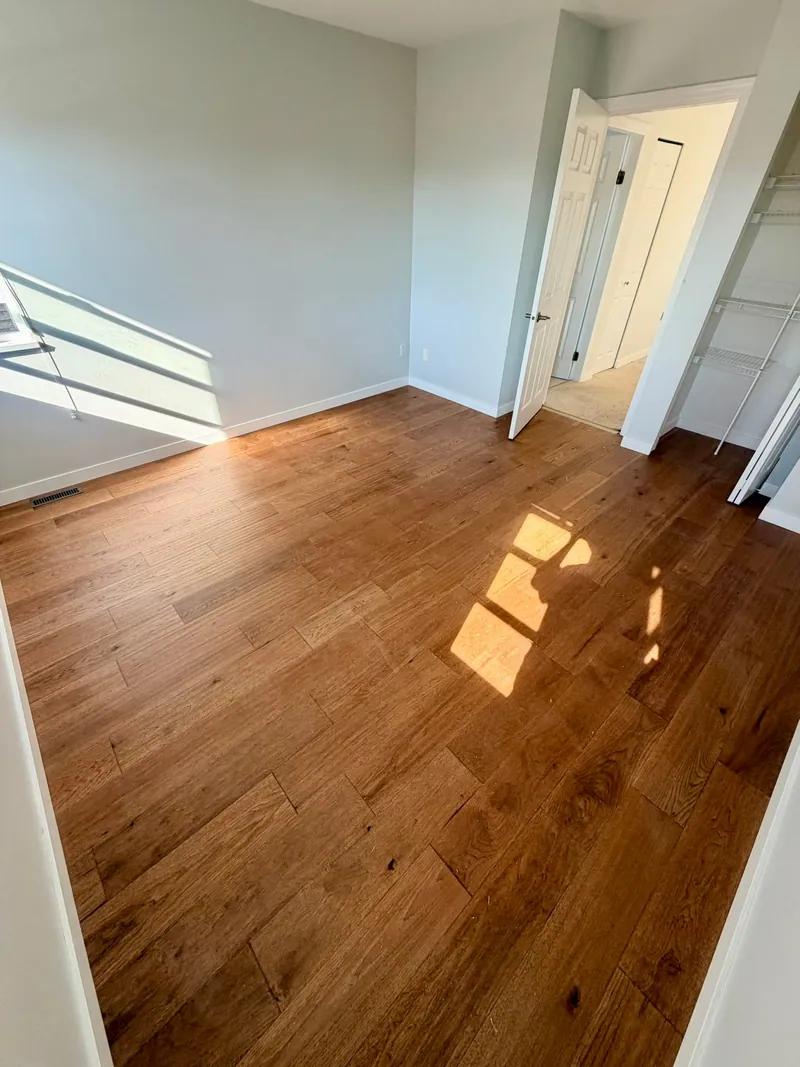
Find a tone that works with what stays.
Start with cabinetry, walls, doors and any existing tile. View samples together in daylight and evening light. Instead of choosing a colour in isolation, look at the room’s whole palette and the surfaces you will keep.
Imagine a full room of boards.
A small sample shows only part of a pattern. Ask to see product images that show variation and repetition, then discuss the room layout with your installer. Plank direction and transitions can change the way connected spaces read.
Let finishing details support the idea.
Nosings, baseboards and transition profiles are visible design decisions. Check whether matching pieces are available and how the new floor will meet adjoining surfaces. A consistent plan is often more useful than adding a complicated pattern late in the project.
Use real projects for reference.
Our Richmond engineered hardwood gallery shows wood character in natural light. The Kitsilano laminate project shows a different tone around an existing fireplace. They can help you form a brief without assuming your space will have the same conditions or cost.
Bring the idea back to daily use.
Once you like the appearance, review cleaning, repair and installation requirements. An attractive sample should still be a sensible fit for the room and your maintenance expectations.
Useful references.
Use the exact product’s documents for an installation decision. These sources provide background; they do not imply that Zunlu Flooring holds a certification or partnership.