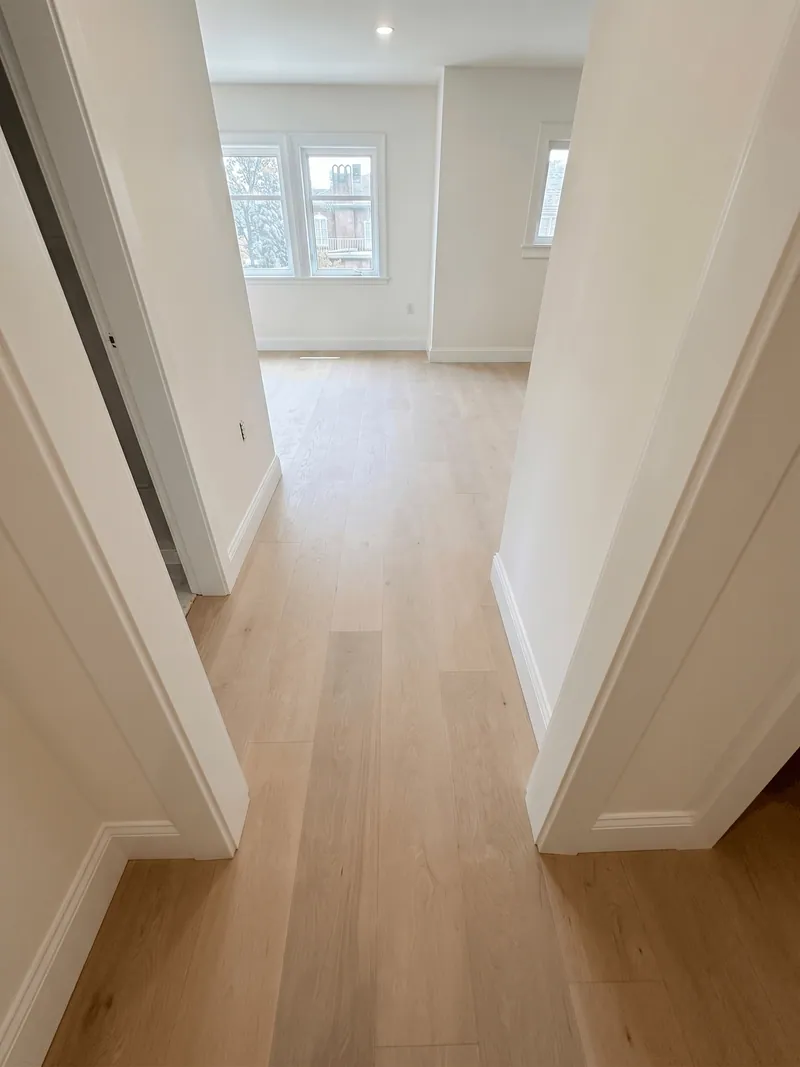
Write down the full task list.
Removal, surface preparation, board layout, door fitting, transitions and trim can all be part of the work. A simple room and a staircase are different projects. Decide which tasks you can complete to the product’s requirements and which need help.
Read the instructions before buying.
Use the actual product’s installation and warranty documents. Do not assume that all DIY work invalidates a warranty or that a click system removes the need for preparation. Compare the required conditions and tools with what you can provide.
Check the building and existing materials.
For a strata property, request building-specific requirements before scheduling. Where older flooring or adhesives may require specialist assessment, address that before disturbance. WorkSafeBC provides homeowner guidance on asbestos in renovation materials.
Compare like-for-like costs.
A DIY budget should identify tools, consumables, waste, disposal and the time the room will be unavailable. A professional quote should explain labour, preparation and finishing. Neither should be reduced to one square-foot figure with an unknown scope.
Choose the next step around the uncertain work.
If you are unsure about substrate condition, stairs or a bonded system, discuss those items before committing to an approach. A measurement and scope review can identify where help will make the most difference.
Useful references.
Use the exact product’s documents for an installation decision. These sources provide background; they do not imply that Zunlu Flooring holds a certification or partnership.