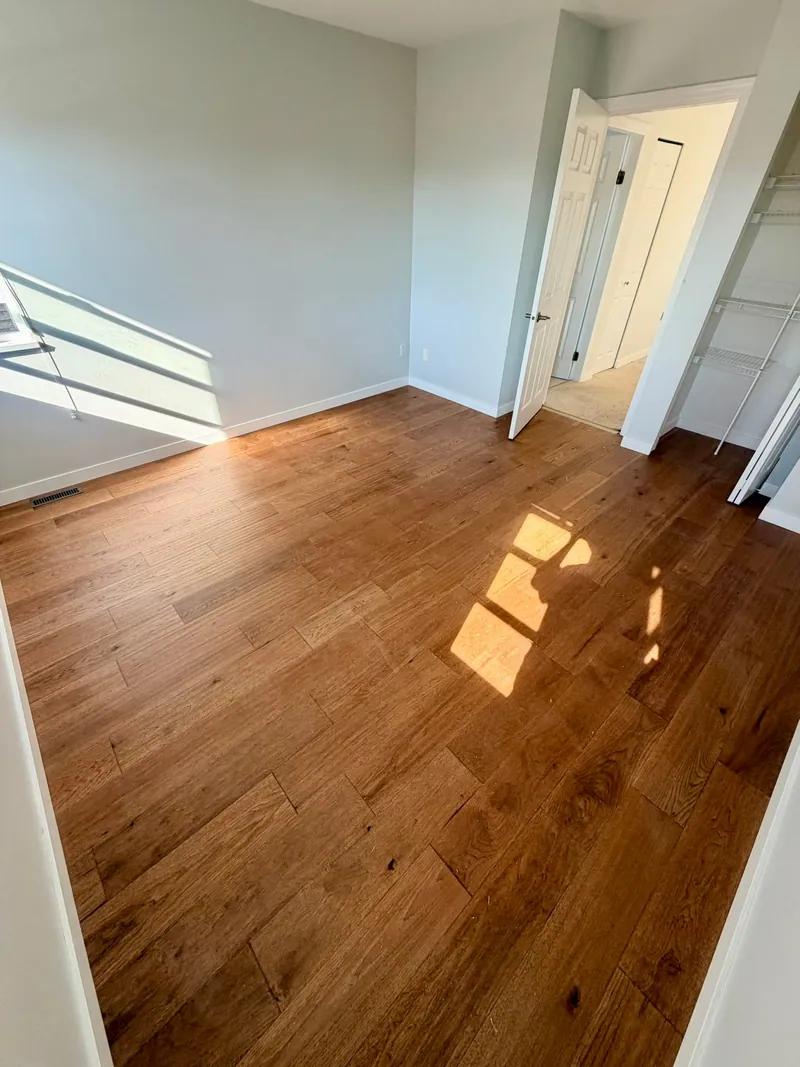
Understand the construction.
Solid wood flooring is wood through its thickness. Engineered wood uses a layered construction with a real wood surface. Construction affects the options to review, but it does not make every engineered board interchangeable.
Choose an approved installation method.
The subfloor, board construction and product instructions guide whether a floating, nailed or bonded method can be considered. Bring the product details to your installer before assuming a preferred method or comparing labour rates.
Ask a specific refinishing question.
Do not buy on a promise that every engineered floor can be sanded a fixed number of times. The wear layer, condition and previous work matter. NWFA’s consumer guidance also identifies several factors that affect how much sanding a floor can accommodate.
Plan the connections early.
Stair nosings, floor vents, tile transitions and door clearances can affect a wood-floor project. Ask what matching components are available and which will be supplied by you or by the installer. Include those items in the quote.
Look at an actual scope.
Our Richmond engineered hardwood project included preparation and staircase details; the Burnaby project used a floating method over plywood. They illustrate different project scopes, not a rule that one method suits every home.
Useful references.
Use the exact product’s documents for an installation decision. These sources provide background; they do not imply that Zunlu Flooring holds a certification or partnership.