Begin with the exposed surface.
Concrete and wood substrates can present different conditions. An existing floor can hide issues that are not visible at the measurement visit. Discuss what can be assessed now and what may only be confirmed after removal.
Distinguish flat from level.
A slope and a local dip are not the same thing. The flooring specification sets the relevant surface requirements. Ask what is being measured and which preparation is proposed, instead of assuming the whole room needs to be brought to one elevation.
Match preparation products to the job.
Grinding, patching and leveling are different operations. Compound selection, primer, application depth and curing need to be planned together. A fixed bag-to-area conversion cannot explain how much material a particular uneven surface will need.
Make allowances visible in the quote.
Ask whether preparation includes labour and materials, how extra work is agreed and how curing affects the installation schedule. Keep removal and preparation distinct so the initial estimate remains understandable.
- What substrate is expected?
- What requirements apply to the chosen flooring?
- Which preparation is already included?
- How will unexpected conditions be handled?
See the preparation in the project context.
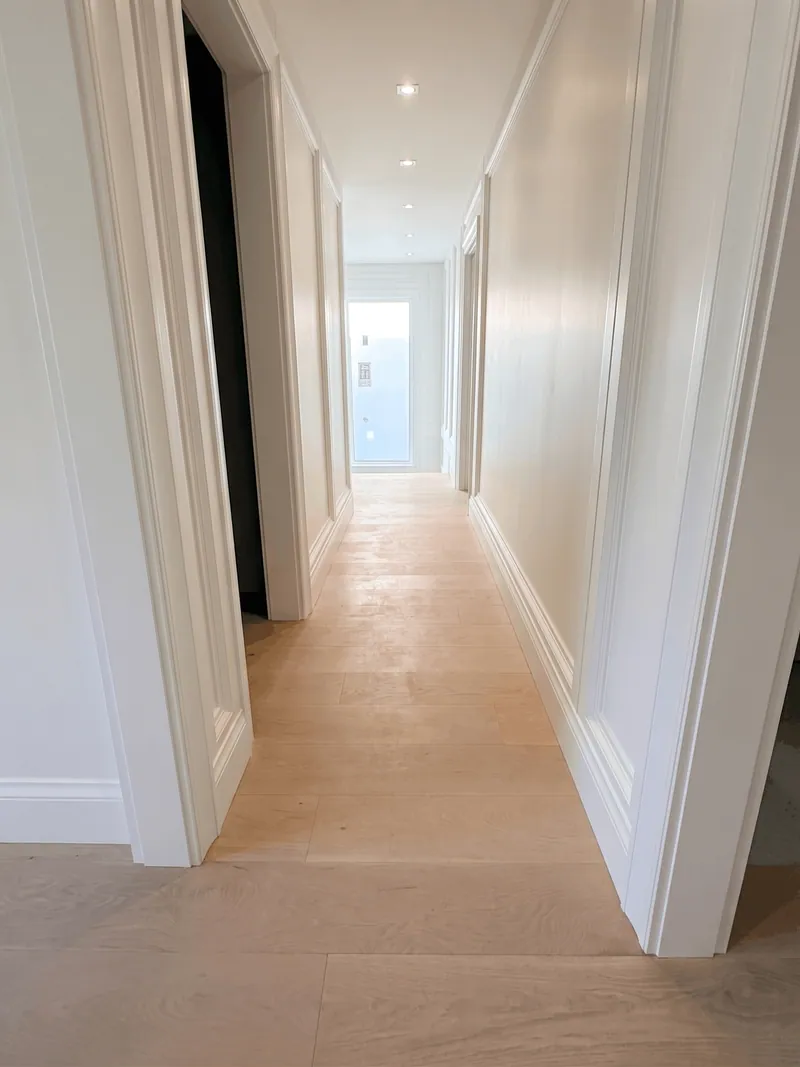
Our Shaughnessy bonded-floor project included concrete moisture testing and adhesive-system preparation. The photographs show the flooring result; the recorded scope explains the work that preceded it.
Useful references.
Use the exact product’s documents for an installation decision. These sources provide background; they do not imply that Zunlu Flooring holds a certification or partnership.